
CALL OR TEXT US NOW
630-426-0196

Recent Blog Posts
Will I Have to Fight With My Ex in Illinois Divorce Court?
 One of the reasons Illinois couples in unhappy marriages often put off getting divorced is because of the fear of a high-conflict courtroom trial. While divorce trials have rightfully earned a reputation for being expensive, unpleasant, and dramatic, the truth is that very few divorces actually end up in trial anymore. Instead, couples are encouraged or sometimes even mandated to pursue mediation and work out their differences through conversation and compromise with the help of a neutral third party. However, mediation is not always successful and sometimes other factors, such as domestic abuse, can make a trial necessary.
Divorce Trials in Illinois Family Court
Trials are hard on divorcing spouses, but they are particularly difficult for children. They also take up important time and resources from county courthouses that are often overworked and have long waiting times for trial dates. For these reasons, judges usually want to see couples exhaust other options before bringing a divorce case to trial.
What Actually Happens When Someone is Murdered for Their Estate Money
 You have probably seen at least one murder mystery movie where a wealthy individual is killed for their money, typically by an heir. It is a fairly common trope for impatient heirs to take matters into their own hands in order to get their share of a high-value estate faster. Sadly, this trope does sometimes play out in real life. You may have seen one of many true crime shows feature a terrifying episode where a person marries a wealthy individual, intending to murder their spouse and claim the entire marital estate. Certainly, few would want their killer to inherit anything at all. This is where "slayer statutes" come into play. In general, these laws prevent murderers from inheriting any part of their victim’s estate.
What if the Killer Does Not Get Convicted?
If the alleged slayer does get convicted of the murder, this establishes conclusive evidence that they are barred from inheriting. However, it is not necessary. To convict a person of a crime, the state must prove "beyond reasonable doubt" that the defendant committed the crime. However, to activate the slayer statute and bar the killer from inheriting, one need only show that it was more likely than not that the murder occurred as alleged.
When Does Child Support End in Illinois?
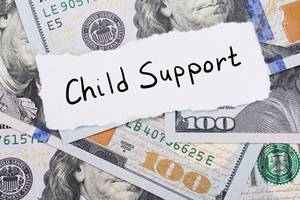 Child support payments are an essential resource for divorced or unmarried parents in Illinois. While some people believe that a parent’s moral obligation to help his or her children may last forever, the law in Illinois says that a parent’s financial responsibility to his or her child does eventually end. Parents who are paying or receiving child support may be anxious to know when, exactly, that legal obligation runs out. As with many legal questions, the answer is, “It depends.”
When Does a Child Become an Adult?
The law says that children become legal adults, with all the responsibility that adulthood entails, when they are 18. However, a parent’s financial responsibility for a child does not automatically end when their child turns 18. If the child is still in high school, child support payments may continue until the child graduates from high school or turns 19. Furthermore, while some child support orders include a specific date at which child support payments will end, other parents must go to court to request a termination of payments before they can stop.
Three Tips for Successful Summer Co-Parenting
 Summertime presents unique challenges to divorced or never-married parents who share underage children in Illinois. Children are out of school, and younger children require full-time care, forcing parents to get creative in finding childcare options and summer activities that are affordable and feasible for their schedules. Coordinating frequent visits and transportation from house to house adds to the complexity of summer schedules. If you are creating or modifying a parenting plan in Illinois, here are three tips to help you co-parent successfully in the coming summer months.
Plan Ahead
Some parents specifically include their summer parenting plan in their initial parenting agreement. Whenever possible, taking this route is recommended for several reasons. First, it allows parents to avoid conflict by making decisions ahead of time. Second, it encourages parents to provide a stable and thoughtful environment for the children during an otherwise unstructured time. Finally, it gives children an idea of what to expect, preventing misbehavior stemming from anxiety or uncertainty about the future.
Top 4 Signs It Might Be Time to End Your Marriage
 Researchers have spent thousands of hours with married couples, analyzing their behaviors, communication patterns, and body language to try to determine whether certain actions are predictive of divorce. Perhaps unsurprisingly, there are actions that, when frequently engaged in by couples, make it easier to predict whether a marriage will eventually end. While nobody is perfect and everybody uses unhealthy communication strategies from time to time, if you recognize that the following behaviors frequently appear in your marriage, you may feel trapped and unhappy. If so, it could be time to speak with an Illinois divorce attorney.
Criticism
Part of personal growth and development is knowing when to change your behavior. Sometimes, spouses can be helpful for gently pointing out that certain things need to change. But when your spouse regularly attacks you or your character, you will likely feel criticized and demeaned - and nobody feels good about that. For example, if your spouse does not like the way you load the dishwasher and, instead of asking you to load it differently, accuses you of always being lazy or stupid, your spouse may be overly critical.
Can I Choose to Homeschool My Kids After an Illinois Divorce?
 All across Illinois, more and more parents are choosing to homeschool their children. In Chicago alone, nearly 25,000 fewer children were enrolled in public schools in the past two years than in previous years. While it is hard to obtain data specifically for the entirety of Cook County, Illinois does not require homeschooling families to register with the authorities and so the rates of homeschooled children are estimated to likely be even higher than the numbers suggest.
The question of whether or not to homeschool poses a potential dilemma for parents who are divorced. The choice to homeschool one’s children often has as much to do with closely-held beliefs around religion or cultural values as it does with fundamental questions about the competency of Illinois public schools. If parents disagree about homeschooling methods or the reasons for leaving the local public school, which parent gets to decide the best path for a child’s education?
Six Tips to Help You Get Through Your Illinois Divorce
 Even when you know that getting divorced is the right choice, the process can still be very difficult. Most people feel a range of complex emotions, including guilt, sorrow, anger, and even regret. Long before the divorce is final, you are likely to be ready to move to the next stage of your life, and you may feel frustrated by how long the process is taking. If any of this sounds familiar to you, here are six tips to help you get through your DuPage County divorce.
Strategies For Getting Through Divorce
-
Surround yourself with friends and family - Divorce often means losing the person with whom you used to share important details about your day. Although you may not be able to replace the role your spouse filled, having people to turn to for friendship, support, and a listening ear can make a big difference in your happiness during divorce.
-
Practice forgiveness - Divorce usually leaves people feeling at least a little angry - angry about infidelity, emotional neglect, abuse, or even just the way things turned out. Holding on to the bitterness of past actions only ends up hurting you in the long turn. Forgiveness is a skill that we can get better at, and practicing forgiveness after divorce will help you move on.
Should We Write a Cohabitation Agreement?
 One of the reasons that the divorce rate among younger couples in Illinois is beginning to decline is that many people are choosing to live together long-term instead of getting married. The risks of marriage may seem too great for the potential rewards, or a couple may simply be uninterested in the hassle and formality of a wedding.
Whatever the reason, living together still presents challenges in terms of who owns what property, especially if a couple shares financial responsibilities like home or vehicle ownership. If you are considering living together but not getting married, you will not be protected by marriage and divorce laws if you separate; you may, therefore, find a cohabitation agreement written with the help of an Illinois family lawyer useful.
Reasons for Writing a Cohabitation Agreement
Couples who are married receive legal protections in the form of property rights, tax benefits, and paternity assumptions about any children that are born to them. However, unmarried couples who want similar benefits need written and signed cohabitation agreements. Some reasons to create a cohabitation agreement include:
What is Testamentary Capacity and Why Does it Matter?
 It is rather common for people to think of estate planning as an end-of-life task. Estate planning attorneys are often called to visit clients in skilled nursing facilities, hospitals, and hospice centers. However, waiting until this point to make a will can have negative ramifications. One of the major requirements for a will to be considered legal and enforceable is that the testator (the person creating their will) must have the mental capacity to do so. This standard is known as "testamentary capacity." It is designed to prevent those who are incapacitated from executing a will that they would not have agreed to if they were not incapacitated. It also protects elders and their families against those who would exercise undue influence over a disoriented adult during the estate planning process.
Testamentary capacity is a relatively low bar - even those with early forms of Alzheimer’s or dementia may be able to make a will under the right circumstances. An attorney will be able to apply this standard to help determine whether someone still has the capacity to make a will.
Can I Use Online Software to Get Divorced in Illinois?
 While many parts of getting divorced in Illinois are flexible, such as the exact details of how a particular couple will divide their marital property, other parts are more technical and, at the end of the day, all elements in a divorce decree must follow Illinois law. For simple divorces involving couples who have no children and no significant shared property, following the law may be easier because there are fewer complex issues to negotiate or legal statutes to interpret.
Many versions of online divorce software have cropped up in recent years to address divorce for couples who trust their ability to follow the law and handle the divorce process themselves. Divorce is not the only legal situation for which software exists - loan agreements, prenuptial agreements, wills and trusts, and tax returns can all be set up online. While the ease and simplicity of many of these services can be beneficial and inexpensive, potential divorcees should be wary of relying on internet software to handle the entirety of their divorce.
Work with Our Team
& Get Started Today
To get in contact with a member of our team, call or text us at 630-426-0196
or fill out and submit the contact form below.
 The use of the Internet or this form for communication with the firm or any individual member of the firm does not establish an attorney-client relationship. Confidential or time-sensitive information should not be sent through this form.
I have read and understand the Disclaimer and Privacy Policy.
Lombard
200 W. 22nd Street, Suite 210
Lombard, IL 60148
P 630-426-0196
MAP + DIRECTIONS
Arlington Heights
634 S. Arthur Avenue
Arlington Heights, IL 60005
P 847-749-4182
MAP + DIRECTIONS

LEAVE US A REVIEW
200 W. 22nd Street, Suite 210
Lombard, IL 60148





Apply Now!
Please submit your resume in PDF format via e-mail: hello@atclaw.com.
Your application should include your resume and a cover letter. Our team reviews all submissions from potential candidates, and we will respond to your email as quickly as possible. If you have any questions about the position or the submission of your resume, please send us an email using the link above.
